


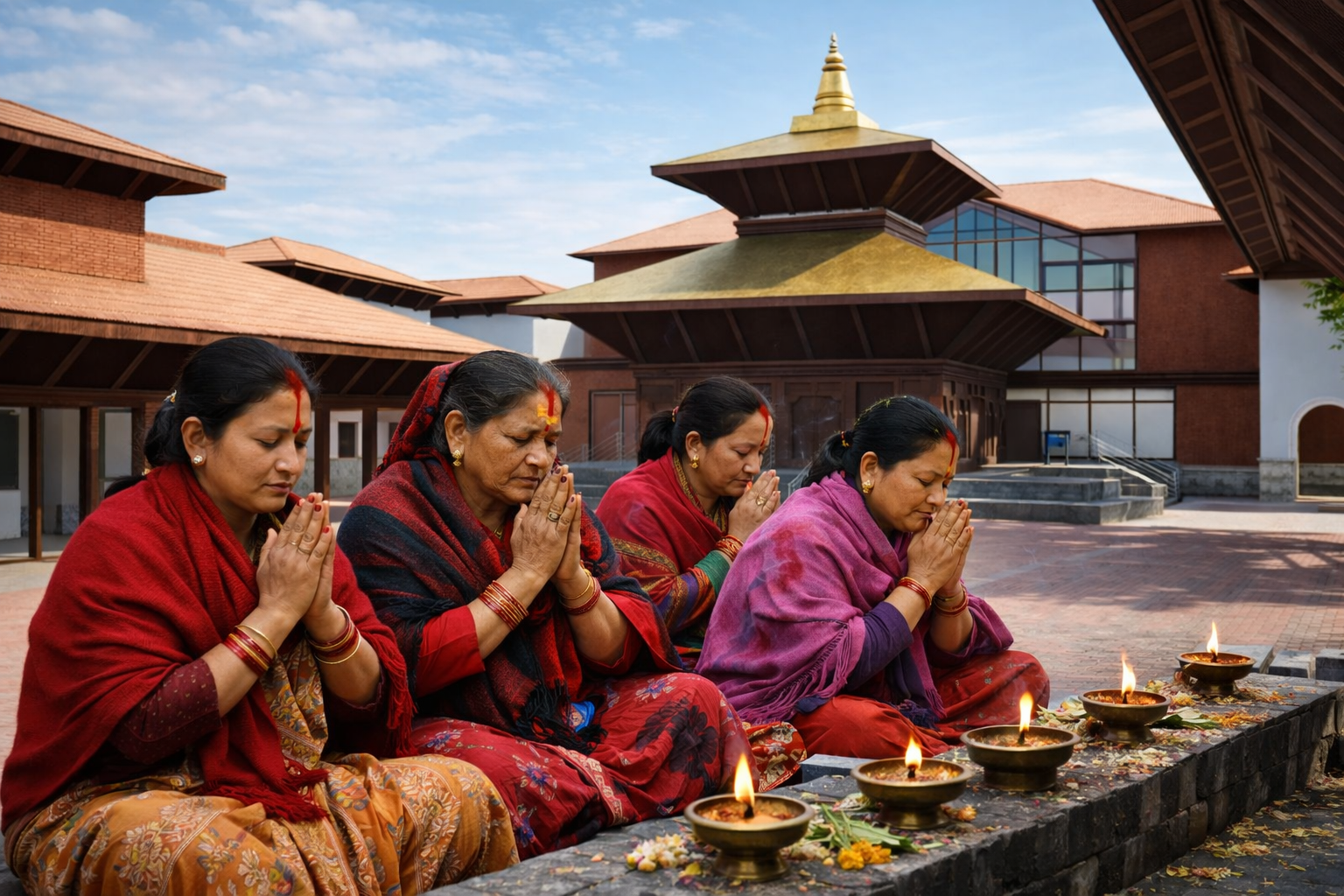
Pooja Descriptions & Materials
Below are descriptions of commonly requested pujas performed by our priests. For a detailed samagri (materials) list or to schedule a puja, please contact the temple office or submit a service request.
Shiva Abhishek (शिव अभिषेक)
A sacred ritual of bathing Lord Shiva with water, milk, yogurt, honey, ghee, and sacred herbs.
Purpose
- Cleansing of mind and soul
- Removing obstacles and stress
- Seeking blessings for peace and well‑being
Note: Commonly performed on Mondays and during Mahashivaratri.
Rudri (रुद्री पाठ)
A powerful recitation of the Rudri from the Yajurveda, usually accompanied by abhishek to Lord Shiva.
Purpose
- Mental peace and healing
- Health and protection
- Family harmony
- Removing negative energies
Note: Recommended for new beginnings, healing, or spiritual upliftment.
Satyanarayan Puja (सत्यनारायण पूजा)
A popular Vishnu puja performed to express gratitude and seek continued blessings from Lord Vishnu.
Purpose
- Family prosperity
- Success in work or business
- Marking auspicious occasions such as birthdays and anniversaries
Note: Often done on Purnima (Full Moon).
Graha Shanti Puja (ग्रह शान्ति पूजा)
Worship of the nine planets (Navagraha) to reduce malefic planetary effects.
Purpose
- Astrological peace and balance
- Improving health, career, and education
- Removing doshas (astrological problems)
Note: Common before travel, marriage, or housewarming.
Ganesh Puja (गणेश पूजा)
Honors Lord Ganesh, remover of obstacles and patron of new beginnings.
Purpose
- Blessings for wisdom and clarity
- Successful start to any event or venture
Note: Often done before major life events, exams, or new jobs.
Lakshmi Puja (लक्ष्मी पूजा)
Worship of Goddess Lakshmi for wealth, prosperity, and harmony at home.
Purpose
- Financial stability
- Family harmony
- Abundance and good fortune
Note: Major day for this puja is during Tihar/Deepawali (Laxmi Puja).
Saraswati Puja (सरस्वती पूजा)
Honors the Goddess of knowledge, learning, and arts.
Purpose
- Success in studies
- Blessings for children and students
- Creativity, music, and learning
Note: Often performed on Basant Panchami.
Annaprashan / Pasni (अन्नप्राशन / पस्नी)
A baby’s first rice‑feeding ceremony surrounded by family and blessings.
Purpose
- Blessings for health, longevity, and a bright future
- Celebrating an infant entering a new stage of growth
Naamkaran (नामकरण)
The sacred naming ceremony for newborns performed according to Vedic tradition.
Purpose
- Sanctifying the child’s name
- Invoking divine blessings for the child’s life path
Bratabandha / Upanayan Sanskar (व्रतबन्ध / उपनयन संस्कार)
Sacred‑thread ceremony marking a boy’s initiation into learning and dharma.
Purpose
- Beginning of spiritual and formal dharmic education
- Traditional transition into responsibility.
Vivaha Sanskar – Wedding Ritual (विवाह संस्कार)
Traditional Nepali Hindu wedding ceremony with all major rituals.
Purpose
- Blessings for lifelong companionship
- Prosperity and harmony in married life
Note: Includes Graha Shanti, Kanyadaan, Saptapadi, and other key wedding rites.
Griha Pravesh (गृहप्रवेश – Housewarming Puja)
Puja performed when entering a new home.
Purpose
- Purifying the home
- Inviting prosperity and divine energy
- Removing negative vibrations
Car Puja (गाडी पूजा)
Blessing for a new or used vehicle.
Purpose
- Safety in travel
- Protection from accidents
- Smooth functioning of the vehicle
Hom / Havan (होम / हवन)
Fire ceremony with Vedic mantras offered into the sacred fire.
Purpose
- Purification of space and environment
- Family harmony and spiritual upliftment
- Removal of negative influences
Buddha Puja (बुद्ध पूजा)
Respectful offering to Lord Buddha with prayers, incense, lamp offerings, and chanting in the Hindu–Buddhist tradition.
Purpose
- Peace, compassion, and mindfulness
- Blessings for family harmony and inner calm