


About Buddhism
Buddhism holds a profound and timeless place in Nepal’s spiritual identity. As the birthplace of Lord Gautama Buddha, Nepal is one of the most sacred destinations for Buddhists around the world. Lumbini, where Siddhartha Gautama was born over 2,600 years ago, stands as a global center of peace, reflection, and compassionate teachings. Nepal’s Buddhist heritage is woven into daily life, from Himalayan monasteries to prayer wheels, stupas, and centuries‑old traditions preserved by communities such as the Sherpa, Tamang, Newar, Gurung, and Tibetan‑influenced groups.
Despite being a Hindu‑majority nation, Nepal has always blended Hinduism and Buddhism in harmony. Many temples, festivals, rituals, and philosophical beliefs overlap naturally—reflecting a shared cultural foundation based on compassion, non‑violence, devotion, and respect for all living beings. This unity is seen vividly in places like Swayambhunath, Boudhanath, and the Newar Buddhist traditions of the Kathmandu Valley.
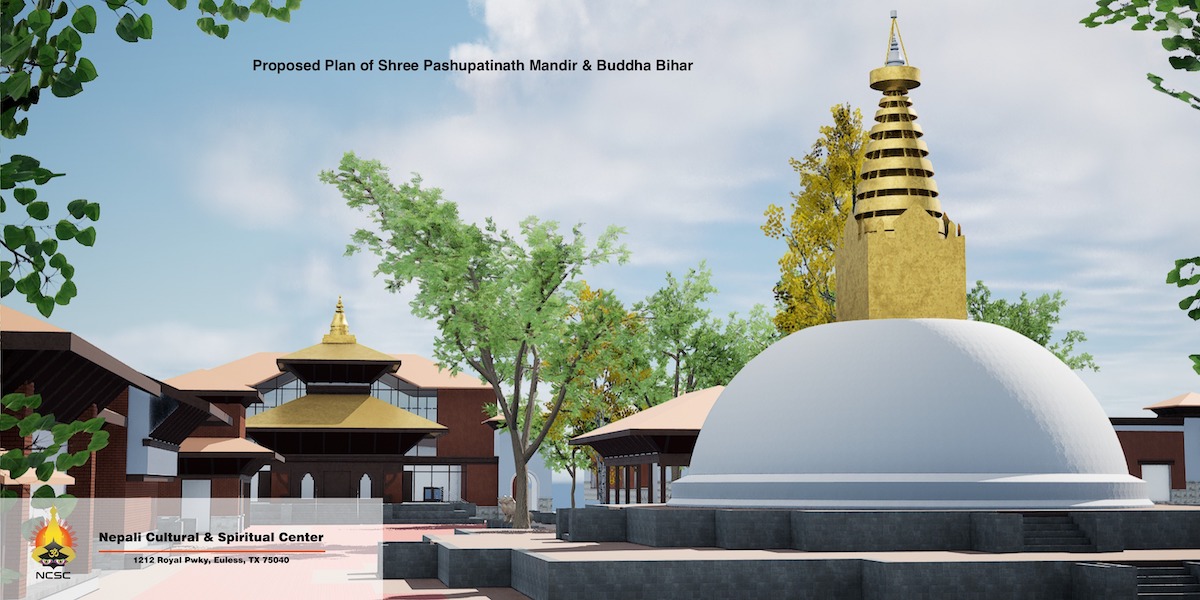
The Buddhist traditions practiced at Shree Pashupatinath Temple / NCSC in Euless, Texas honor this same spirit of harmony. The center provides a sacred space for meditation, prayer, chanting, and Buddhist ceremonies, ensuring that Nepali Buddhist culture continues to thrive in the Dallas–Fort Worth community. From celebrating Buddha Jayanti to observing Losar, offering lamps, reciting mantras, and hosting teachings rooted in compassion and mindfulness, the temple preserves the spiritual lineage carried from Nepal.
For Nepali families living abroad, these traditions create a living connection to their origins—offering a place for inner peace, cultural continuity, and community bonding. Just as in Nepal, Buddhism at NCSC coexists naturally with Hindu worship, symbolizing the shared heritage of the Nepali people. The Buddhist presence at the temple stands as a reminder of Nepal’s gifts to the world: peace, compassion, wisdom, and the timeless teachings of the Buddha.